First wave artificial intelligence showed that the software could comprehend the language, recognize patterns, and assist users with ever complex tasks. The majority of these programs depended on sending information to remote servers before giving an answer. Cloud computing, even though it has accelerated AI adoption, also brought issues in terms of the speed of processing and privacy. It also increased costs for infrastructure.
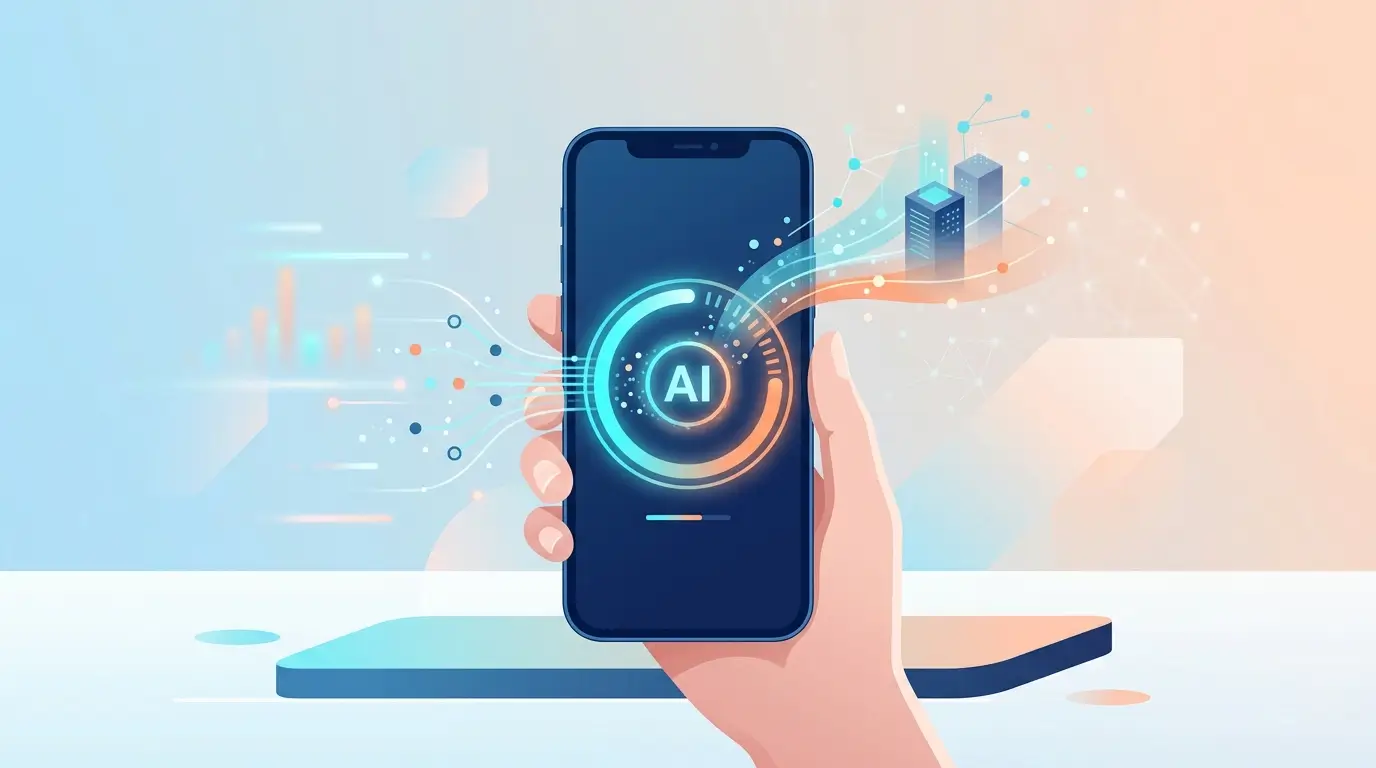
Nowadays, many engineering teams are working towards the opposite view. Instead of focusing on artificial intelligence as a remote service, they are developing systems that operate closer to the places where the decisions are made. This trend is driving adoption of on-device AI and enabling applications to respond faster and less dependent on the infrastructure of an external source, and maintain the highest level of security for sensitive data.
Modern AI infrastructure must be built for real-time workloads
It’s becoming clear to programmers that selecting the right language model to create intelligent software will not do the trick. Performance is also dependent on the architecture supporting it. The efficiency of the runtime, the ability to observe, deployment flexibility, security, and scalability all influence the degree to which an AI application succeeds in the real world.
This increasing complexity has led to a greater the demand for a stronger AI agent infrastructure that is capable of creating autonomous workflows, intelligent decisions, and consistent execution. Rather than relying solely on generic platforms that are made to be used in every case, organizations prefer specialized infrastructures specifically designed to meet their specific operational requirements.
Thyn was developed around this idea. Instead of providing a single AI application, the company develops basic runtime engines to allow for multiple products to be specialized while allowing each one to evolve independently. This method of architecture allows engineers to concentrate on solving business challenges instead of rebuilding the main infrastructure.
Better tools help developers build better systems
Developers need more than APIs, as AI is embedded in software products. They require environments that simplify deployment, debugging, monitoring, runningtime management, and testing.
Modern AI developer tools increasingly emphasize transparency and control. Developers are seeking to quantify latency, maximize resource use, and understand how systems perform under heavy workloads.
Thyn invests heavily in these engineering foundations by focusing on quantifiable results of the system rather than broad claims of marketing. Runtime research, deployment strategies, evaluation frameworks, the developer experience, and observability are treated as fundamental engineering disciplines that make every product that is built within its ecosystem.
A customized intelligence solution outperforms standard platforms
Not all AI workloads operate in the same ways under the same circumstances. Financial trading, cryptographic applications marketing automation, embedded software and autonomous systems are all different and have unique performance specifications, security models, and operational constraints.
Thyn creates dedicated engines which are specifically designed to work in specific areas, instead of forcing all applications to utilize the same infrastructure. The engines can develop independently and share the benefits of architectural research.
The same concept is starting to have an impact on AI Coding agents. Modern coding agents, instead of being general-purpose assistants are becoming more specific. They aid developers in the creation of code analyze repositories, and automate repetitive engineering work, but remain integrated into current processes for development.
More information closer to the decision-making point
Artificial intelligence’s future is moving beyond simply generating information. The most successful systems are in a position to think, analyze the context, make decisions and execute actions with speed.
If you are designing products that depend on responsiveness and reliability, as well as privacy, running intelligence locally could be an important benefit. On-device AI reduces dependency on network as well as latency, allowing applications to operate even if connectivity is limited. It provides a more pleasant user experience and gives organizations greater control over their data and infrastructure.
The adaptable AI agent architecture guarantees that intelligent system remain observable and maintained. It also permits them to adjust as the demands alter.
Thyn is a brand-new company that is a signpost to this direction, focusing on the institution behind intelligent software, instead of just focusing on software. Through the use of advanced runtime technology specially designed engines, robust AI tools for developers, and modern AI coding agents, the company is helping to create an ecosystem in which AI becomes faster, safer, more secure, and ultimately more useful for the developers creating the next generation of smart software.